Canvas is accessible only within New Zealand and Australia.

Canvas is accessible only within New Zealand and Australia.
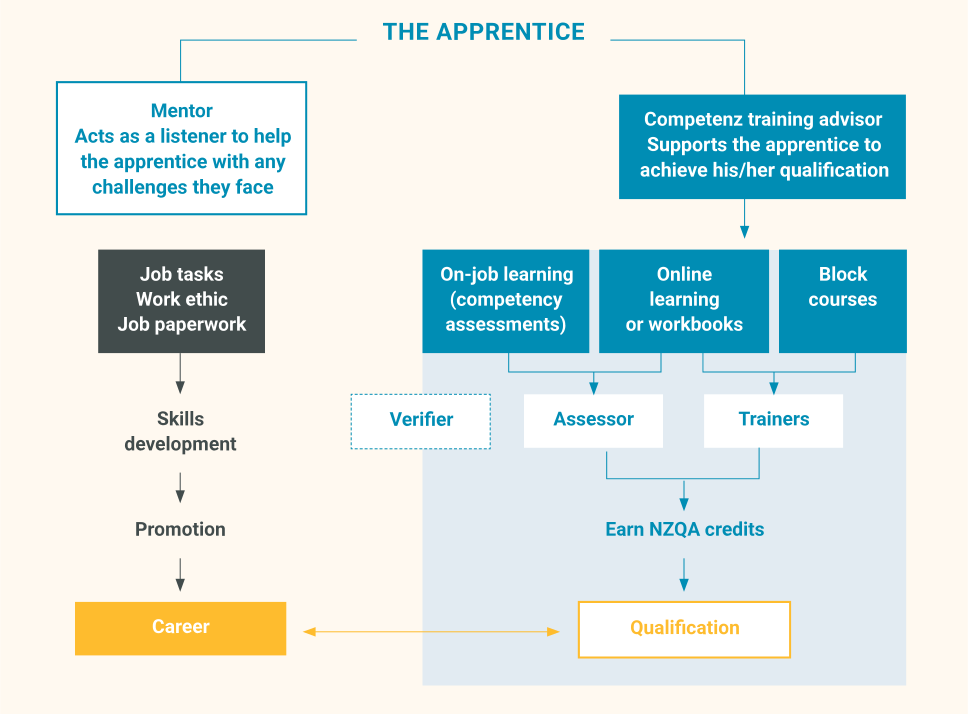
Apprentices learn three ways, and a clear structure — agreement, plan, assessments, and support — keeps everyone on track.
Apprentices learn in three main ways:
Most training takes place in the workplace. The employer or manager demonstrates how tasks are done and checks that the apprentice has learned the skill. Apprentices develop their abilities by doing real work as part of their daily responsibilities, gaining hands-on experience and applying what they've learned in practice.
Some apprenticeships include an online learning component, completed through the eLearning platform. This theory-based content supports the practical skills being developed and helps build foundational knowledge.
Some apprenticeships include block courses, usually held at a polytechnic or training provider. These run for 2 to 3 weeks and give apprentices a chance to focus on specific skills, often with access to specialist equipment, practical projects, and experienced tutors away from the day-to-day workplace.
Together, these three learning methods prepare apprentices to meet the national industry standards for their trade or chosen strand.
A training agreement is the official document that sets up an apprenticeship. It is signed by the employer, the apprentice (also called the learner) and Competenz. This agreement:
It also gives Competenz permission to access and share relevant information about the employer and the apprentice, so we can support the training properly and meet national reporting requirements. Signing the agreement means everyone understands their role in helping the apprentice build skills and succeed in the workplace.
The individual training plan outlines the structure for the apprenticeship. It is put together by the apprentice, Competenz training advisor and you, the employer. It includes a variety of learning resources and assessment methods. The training plan is divided into a series of steps, made of a group of unit standards, each with an assessment that the apprentice must pass.
The order in which the apprentice does their learning is important — they need to learn the right things at the right time. For example, we want to ensure the apprentice has the relevant Health and Safety knowledge before applying it in the practical on-the-job units, and that they understand the basics well before attempting more advanced assessments. Your training advisor will help order the plan to suit your workplace and the apprentice's needs. From there, it's about sticking to the plan and making steady progress.
Depending on the qualification, your apprentice may be required to attend block courses. Before they can attend a block course, they must complete all required pre-requisites.
For apprenticeships that include eLearning, apprentices receive an initial email with login instructions. They're also invited to an online induction covering how to use the system and how eAssessments work. Once a unit is achieved, it is archived — still there when needed, but out of the way of outstanding units. There is a 'getting started with Canvas' course available. All assessments are accessed through the eLearning platform. For questions about using eLearning, contact your training advisor first; if unavailable, email canvas.lms@competenz.org.nz.
Success doesn't happen by accident; it takes planning and teamwork. Apprentices need to commit to regular weekly study time. Employers play a key role by providing support and staying in regular contact. If your workplace has a quiet room, consider making it available for study — before or after work, or during work time if you're open to it. Just one dedicated study session each week can make a big difference.
Every apprenticeship has its own set of unit standards and credit requirements; the training plan lays out what needs to be completed and when. Your training advisor will help create a realistic study plan.
Competenz training advisors make regular in-person visits to check in and review progress. We strongly encourage both apprentice and employer to attend together. After each visit, the training advisor provides a visit summary report outlining:
Go over the report together — celebrate progress, spot anything that needs attention, reset goals if needed. Between visits, check progress online by logging in to Competenz Central and opening eServices. If you don't have access, your training advisor can set it up.
Assessment is a team effort:
Usually supervisors or team leaders in the workplace. They watch the apprentice perform a task and confirm it was done to the right standard. They don't make the final call; they sign off that the apprentice is ready to be assessed.
Trained professionals who review the apprentice's work (written answers, reports or practical evidence) and decide if it meets the standard. They make sure assessments are fair, consistent and meet national requirements. In most cases your training advisor is also your assessor.
Mark assessments completed through the eLearning platform, checking work against the unit standard and deciding 'competent' or 'not yet competent', with feedback and guidance.
Based in the workplace, trained and approved by Competenz. They can both verify and assess on site. Not every workplace has one; if not, the training advisor arranges someone else.
How we check what apprentices have learned and can do. Some are like quizzes (written or online questions); others ask for a practical task to be verified or observed by someone qualified; sometimes a mix. Every assessment comes with a guide explaining what needs to be done. Once submitted, a trained assessor reviews it, checks it meets requirements and gives clear feedback. The apprentice works through the feedback until they've met all requirements — written and practical.
Every assessment guide includes clear instructions on:
Read it carefully and follow the instructions — incomplete submissions cause delays. If the apprenticeship includes eLearning, all assessment guides are available through the eLearning platform. The training advisor works with the apprentice to agree which unit standards to focus on and when assessments should be completed. On-the-job assessments are downloaded, printed and completed by the apprentice, then observed and verified by their workplace supervisor, then submitted to a Competenz assessor (usually the training advisor) for marking and feedback.
For some assessments, apprentices provide photos as supporting evidence. Read the requirements carefully for exactly what's expected. Be disciplined from day one — if storing photos on a phone, download and back them up regularly. Apprentices and employers should regularly review the saved photos together to keep on-the-job learning on track. The apprentice learner guide provides best-practice guidance.
If the apprenticeship includes eLearning, apprentices complete open-book online assessments. Most answers are in the learning materials, though some questions need extra research. Two types:
To avoid delays, before starting an eAssessment apprentices should:
If an assessment includes both types, the machine-marked results show first.
Apprentices submit completed assessments, with required evidence and signatures, by email or directly to their training advisor. For eLearning assessments, they submit directly through the platform. All assessments must be the apprentice's own work — being honest about what's been done and who helped builds trust and makes the qualification mean something. Copied or AI answers take away from real learning and could delay progress.
The assessor explains which questions weren't answered correctly, gives guidance on what to improve and where to find help. Read all feedback carefully and focus only on the questions identified. Only those questions/sections need updating and resubmitting — no need to resend the entire assessment.
Learning by doing means we don't always get it right first time; that's part of the process. Apprentices may revisit work, apply feedback and try again. Employers play a big role by encouraging and supporting apprentices as they build confidence. Assessments are only complete once everything is correct — all questions answered and all practical tasks marked competent.
Encourage apprentices to bring on-the-job assessments into team spaces like the staffroom. Talking through tasks in a relaxed setting helps them learn and lets qualified tradespeople share skills and experience, benefiting the wider team through knowledge-sharing and fresh thinking.
Where textbooks are part of a programme, they're provided to support theory and practical learning. Textbooks for an apprenticeship are listed in the apprenticeship details and training plan.
Everyone learns differently, and apprentices aren't expected to know everything from day one; what matters is knowing where to go for help. One of the most important supports is the training advisor, who visits regularly to:
Between visits, apprentices can contact their training advisor by phone or email any time.
If an apprenticeship includes online learning and your apprentice doesn't have access to a computer, Competenz can lend them a Chromebook. Talk to your training advisor to arrange one.
If an apprentice needs help with eLearning or is stuck on a question, call 0800 526 1800 (and press 4) on Tuesdays, Wednesdays and Thursdays between 5pm and 8pm to talk to one of our eAssessors.
Available to support learning and connect apprentices with others on a similar journey. Usually held fortnightly during the week, running for two hours, led by experienced experts who help with assessment questions and study tips. Once enrolled, regular attendance is expected unless unwell or given leave by a manager due to work demand. Enrolment and session details through your training advisor.
Sometimes reading, writing or maths can get in the way of progress. Competenz partners with expert tutors. Support includes:
Signs someone may need help: avoiding responsibility, repeating the same errors, hesitating to ask questions. Contact your training advisor or email learnersupport@competenz.org.nz.
At the start, apprentices complete a short literacy and numeracy assessment (online or paper) to identify strengths and areas where extra support could help.
Dyslexia doesn't affect intelligence but can make reading, writing and working with symbols harder. Competenz offers a free online 'QuickScreen' screening tool; we manage the application with Workbridge and help arrange resources.
About making confident money decisions. Competenz connects apprentices with trusted tools and resources from the Commission for Financial Capability to build confidence managing money.
All apprentices have access to mental health and wellbeing resources. Competenz offers free confidential counselling through our provider Vitae, with the learner's choice of counsellor. A 24/7 contact centre and duty counsellor are available for emergencies.
Completing an apprenticeship is a major milestone reflecting real-world skills, industry standards and a nationally recognised qualification. Once complete, an official certificate is issued — presented in person by a training advisor or couriered to the workplace. It represents personal commitment and hard work, plus the support of the workplace, whānau and others along the way.