Plastics

Nationally recognised training for the technicians who install and maintain the milking, water, and effluent systems New Zealand's dairy industry depends on.

Competenz can provide training plans, support and qualifications — tailored to your business's specific needs.

5,672
Apprentices trained
Level 4
National qualification

The general engineering programmes provide a nationally recognised qualification that combines practical workplace learning with technical knowledge. It equips people with the skills to build, maintain, and repair a wide array of machinery and equipment using fitting, machining, fabrication, hydraulics, pneumatics, and welding—meeting industry standards across diverse mechanical contexts. Training also covers health and safety legislation, interpreting drawings and specifications, engineering problem-solving, quality systems, and effective communication within teams and workplaces. These two programmes can be done indepentantly or as one apprenticeship.

Benefits of the programme

•  Nationally recognised qualifications built to industry standards
•  A blend of practical training and technical knowledge
•  Flexible structure combining workplace learning and block courses
•  Coverage of safety and quality standards in line with industry practice
•  Build skills in plastics processing methods, die setting, equipment operation, and quality control
•  Ability to progress through a pathway from operator to production engineer roles
•  Designed to meet the ongoing needs of a modern, high-demand industry.

How we work with you

We partner with members of your industry to help recruit and build talented employees. This support includes promoting careers in your industry, identifying potential learners, and encouraging work placements.

We also ensure your industry’s qualifications continue to meet needs, support industry events like conferences, and regularly celebrate your learners’ success.

When apprentices enrol, we assign them a Competenz account manager. Our account managers understand the industry and the skills learners and businesses need to gain.
Employers Hub

Sign up a new apprentice

Use this form to register with Competenz. We’ll get you started and ensure everything is set up smoothly.

Get started →
Onboarding guides

Get a clear picture of how apprenticeships work and the part everyone plays — your responsibilities, the importance of a workplace mentor, and how to help your apprentice succeed.

Onboarding guides →
See your business impact

View the approximate cost of an apprenticeship and how the benefits build as your apprentice develops. The lasting value of investing in your workforce.

ROI Calculator →

The dairy industry faces a persistent shortage of skilled technicians. Training your own people is the most reliable way to build capability that actually stays.

Competenz Training Advisor — Dairy Systems, Waikato region

You run the operation. We handle the training architecture.

What do they do?

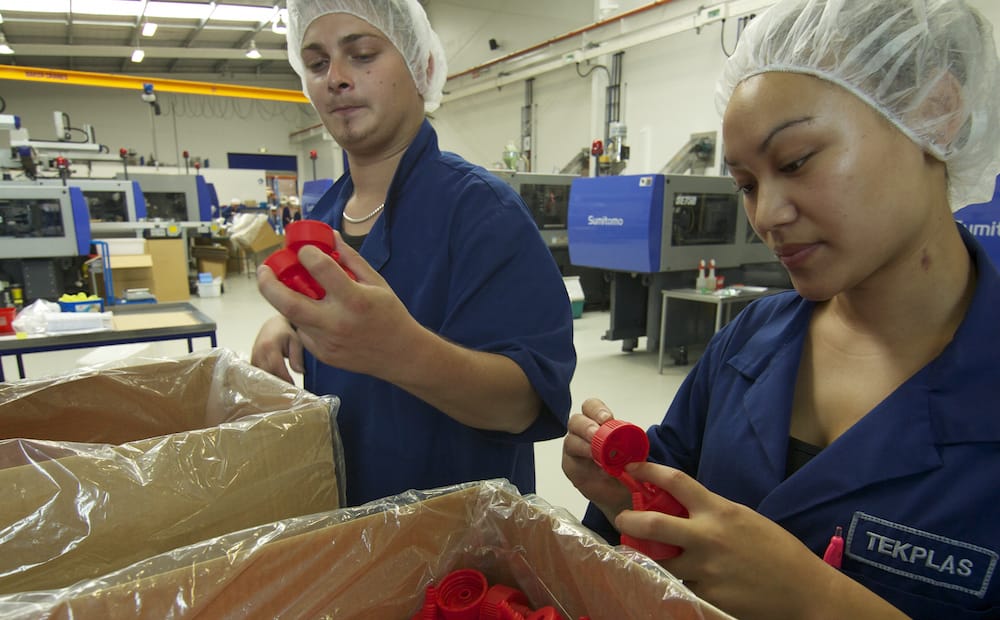
Plastics Engineers manage, optimise, and maintain the processing of plastics products. They work with a variety of plastics processing machines and there are senior and specialist roles that you can progress to and qualify in.

A typical day

Typically, an eight-hour day; starting early or shift work.

Plastics engineers operate one or more plastics processing machines, run trials, make recommendations to improve production processes, troubleshoot and resolve processing problems, and quality assure.

Sounds like you?

If you’re practical, curious about how things work, and comfortable in both workshops and outdoors — this is worth reading.

Study areas that help

  • Sciences
  • Workshop Technology

Helpful experience

  • Analysing, researching or problem solving
  • Making or fixing things
  • Working with machinery.

Work environments

  • Indoors (workshop or plant).

Good to have

Problem-solving mindset

  • Strong eye for detail
  • Good literacy and numeracy
  • Good initiative/‘can-do’ attitude
  • Good work habits/time management

Career pathway

The apprenticeship is the foundation — not the ceiling.

School

Getting ready

These can be useful from School:

  • NCEA level 2 Maths and English is recommended
  • Practical subjects such as Technology or Workshop Skills is recommended.

Entry level

Traineeship or apprenticeship

  • Plastics Operator
  • Plastics Technician
  • Plastics Engineer
  • Plastics Die Setter.

Advancing

Higher learning

  • Team Leader
  • Manager
  • Factory Manager
  • Operations Manager
  • Production Manager.

Senior

Higher learning

  • Business Owner.

Common questions

How do I set up my account for Competenz Central?

For apprenticeships, the government contributes to training costs — you pay wages. The exact figure depends on your situation. Use the ROI Calculator for a personalised estimate.

I’m an international student - can I do an apprenticeship or traineeship?

For apprenticeships, the government contributes to training costs — you pay wages. The exact figure depends on your situation. Use the ROI Calculator for a personalised estimate.

Do I need a visa or work permit?

For apprenticeships, the government contributes to training costs — you pay wages. The exact figure depends on your situation. Use the ROI Calculator for a personalised estimate.

How old do I need to be?

For apprenticeships, the government contributes to training costs — you pay wages. The exact figure depends on your situation. Use the ROI Calculator for a personalised estimate.

How long is an apprenticeship/traineeship?

For apprenticeships, the government contributes to training costs — you pay wages. The exact figure depends on your situation. Use the ROI Calculator for a personalised estimate.

How much does an apprenticeship/traineeship cost?

For apprenticeships, the government contributes to training costs — you pay wages. The exact figure depends on your situation. Use the ROI Calculator for a personalised estimate.

I have a job, what do I do next?

For apprenticeships, the government contributes to training costs — you pay wages. The exact figure depends on your situation. Use the ROI Calculator for a personalised estimate.

Do I need to be employed to be an apprentice/trainee?

For apprenticeships, the government contributes to training costs — you pay wages. The exact figure depends on your situation. Use the ROI Calculator for a personalised estimate.

What experience do I need to do an apprenticeship/traineeship?

For apprenticeships, the government contributes to training costs — you pay wages. The exact figure depends on your situation. Use the ROI Calculator for a personalised estimate.

What is an apprenticeship/traineeship?

For apprenticeships, the government contributes to training costs — you pay wages. The exact figure depends on your situation. Use the ROI Calculator for a personalised estimate.

Can I be a trainee?

For apprenticeships, the government contributes to training costs — you pay wages. The exact figure depends on your situation. Use the ROI Calculator for a personalised estimate.

Can I be an apprentice?

For apprenticeships, the government contributes to training costs — you pay wages. The exact figure depends on your situation. Use the ROI Calculator for a personalised estimate.

Who is Competenz?

For apprenticeships, the government contributes to training costs — you pay wages. The exact figure depends on your situation. Use the ROI Calculator for a personalised estimate.

Plastics

The general engineering programmes provide a nationally recognised qualification that combines practical workplace learning with technical knowledge. It equips people with the skills to build, maintain, and repair a wide array of machinery and equipment using fitting, machining, fabrication, hydraulics, pneumatics, and welding—meeting industry standards across diverse mechanical contexts. Training also covers health and safety legislation, interpreting drawings and specifications, engineering problem-solving, quality systems, and effective communication within teams and workplaces. These two programmes can be done indepentantly or as one apprenticeship.

Benefits of the programme

•  Nationally recognised qualifications built to industry standards
•  A blend of practical training and technical knowledge
•  Flexible structure combining workplace learning and block courses
•  Coverage of safety and quality standards in line with industry practice
•  Build skills in plastics processing methods, die setting, equipment operation, and quality control
•  Ability to progress through a pathway from operator to production engineer roles
•  Designed to meet the ongoing needs of a modern, high-demand industry.

Competenz can provide training plans, support and qualifications – tailored to your businesses specific needs.

How we work with you

The New Zealand Certificates in Plastics Processing and Plastics Engineering have been developed by leading New Zealand plastics manufacturers to equip staff with the skills and knowledge to work productively and safely.

Together with the Level 2 programme in manufacturing (with a plastics specialisation) the qualifications form a pathway of learning from entry level plastics operators, die setters and technicians to experienced plastics production engineers.

The programmes have specialisations designed with the future in mind.

We partner with industry associations like Plastics New Zealand to help recruit and build talented employees.

Employers Hub

Sign up a new apprentice
Use this form to register with Competenz. We'll use this form to get you started and ensure everything is set up smoothly.
Onboarding guides
Get a clear picture of how apprenticeships work and the part everyone plays. These guides explain your responsibilities, the importance of a workplace mentor, and how you can help your apprentice succeed.
See your business impact
Use this calculator to view the approximate cost of an apprenticeship and how the benefits build as your apprentice develops. It’s designed to show the lasting value of investing in your workforce.

Ready to get started?

What do they do?

Plastics Engineers manage, optimise, and maintain the processing of plastics products. They work with a variety of plastics processing machines and there are senior and specialist roles that you can progress to and qualify in.

A typical day

Typically, an eight-hour day; starting early or shift work.

Plastics engineers operate one or more plastics processing machines, run trials, make recommendations to improve production processes, troubleshoot and resolve processing problems, and quality assure.

Sounds like you?

Study areas
  • Sciences
  • Workshop Technology
Attributes
  • Strong eye for detail
  • Good literacy and numeracy
  • Good initiative/‘can-do’ attitude
  • Good work habits/time management
Helpful experience
  • Analysing, researching or problem solving
  • Making or fixing things
  • Working with machinery.

Preferred work environments
  • Indoors (workshop or plant).

Pathway

School

These can be useful from School:

  • NCEA level 2 Maths and English is recommended
  • Practical subjects such as Technology or Workshop Skills is recommended.
Entry level jobs

Traineeship or apprenticeship

  • Plastics Operator
  • Plastics Technician
  • Plastics Engineer
  • Plastics Die Setter.
Advancing jobs

Higher learning

  • Team Leader
  • Manager
  • Factory Manager
  • Operations Manager
  • Production Manager.
Senior jobs

Higher learning

  • Business Owner.

FAQs

Related FAQs

Ready to get Started?